
Grid integration of PV power plants
Why do we need grid integration?
Solar power is growing rapidly in Norway and across Europe, and PV is expected to play an increasingly important role in the future energy system. As installations grow - ranging from rooftop installations to large ground-mounted plants - the power grid must adapt to new patterns of variable, distributed generation.

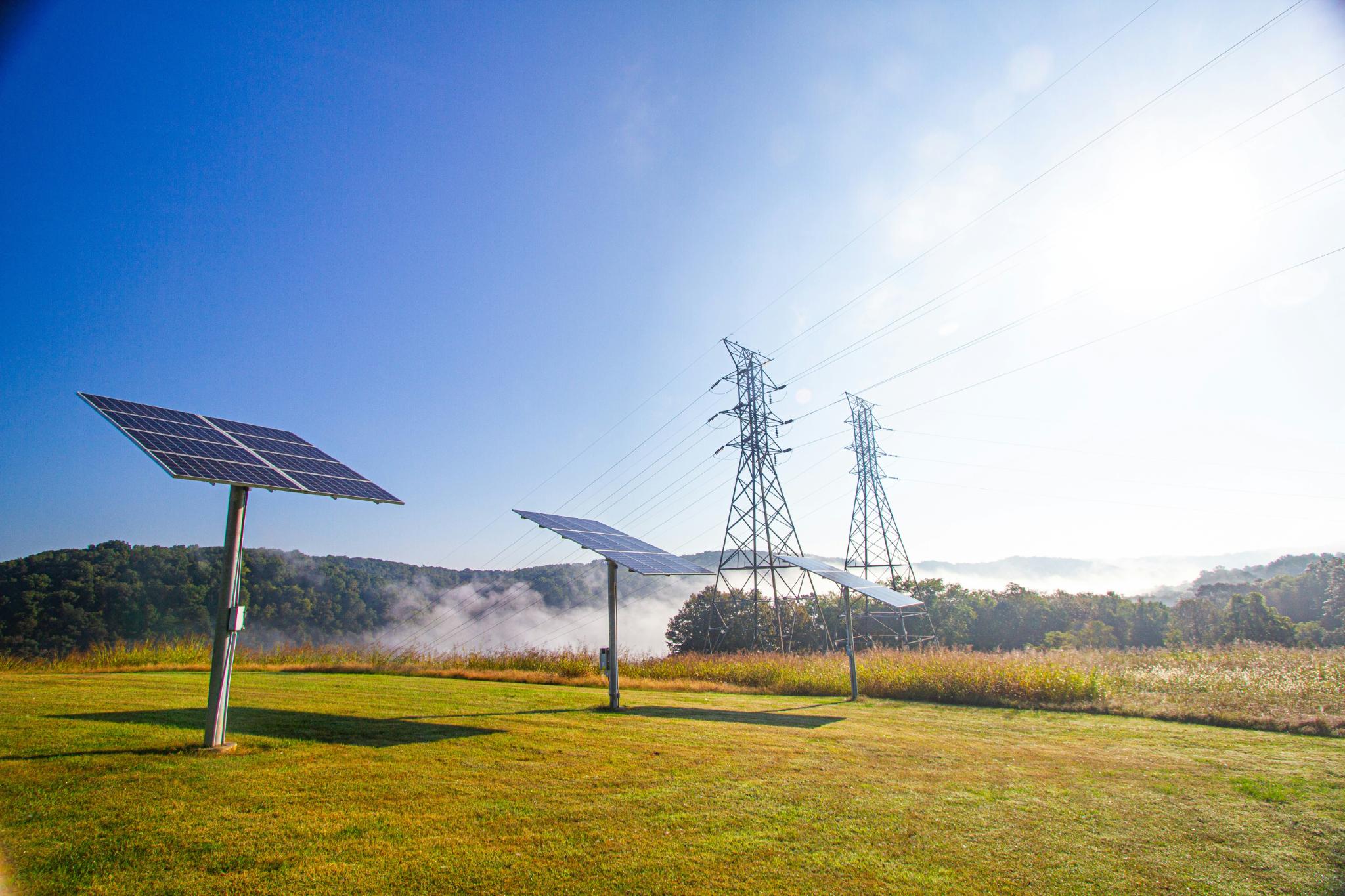
How solar power interacts with the grid
Grid integration refers to how PV interacts with the electricity grid, how it influences power flows and operating conditions, and how technical, regulatory and economic frameworks must evolve to support large-scale deployment. Increasing PV penetration introduces challenges such as rapid production fluctuations, voltage rise in low‑load areas, and local capacity constraints in the distribution grid. On the system level, more solar power increases the need for accurate short‑term forecasting, demand‑side flexibility, storage solutions, and hybrid system configurations. At the same time, PV can reduce loading in parts of the grid, especially when installed close to consumption, and hybrid PV‑battery or PV‑wind systems can enhance both stability and security of supply when properly integrated.
Modern PV inverters may support the grid through functionalities such as voltage regulation, reactive power control and frequency services (keeping the grid at a stable 50 Hz). Realizing this potential depends on updated grid codes, efficient connection processes and planning tools that balance rapid deployment with grid capacity, flexibility options and societal priorities. As PV becomes a mainstream technology, new models for planning, operation and investment are needed to ensure that production growth aligns with grid capabilities.
FME SOLAR research on grid integration
FME SOLAR addresses these challenges by developing new knowledge, models and strategies for cost-efficient and scalable PV integration across the Norwegian and European power systems. This includes analyzing how PV can contribute to climate targets and how solar power interacts with the wider energy system, for example through its influence on demand peaks, the flexibility potential in buildings and industry, and the role of storage and demand response.
To support this, new frameworks are being developed for efficient planning and operation of grids with high PV penetration. These include methods for identifying production peaks, assessing local capacity limitations, and evaluating which measures, such as flexibility, batteries or hybrid PV solutions, are most effective under different conditions. In parallel, virtual power plant concepts and advanced control concepts are explored to allow PV to provide services beyond energy production, including contributions to stable system operation and participation in electricity and reserve markets.
Further reading: